Things to Do in Suva in April
April weather, activities, events & insider tips
Low Season · Budget Friendly
April Weather in Suva
Long-run averages for April
86°F (30°C)
High Temp
75°F (24°C)
Low Temp
13.2 inches (335 mm)
Rainfall
86%
Humidity
18
Rainy Days
11
Sunny-Day UV
⚠ April falls within the South Pacific cyclone season, which officially ends April 30. Late-season tropical storms are uncommon but can still form, bringing sustained winds, heavy rain, and rough seas that cancel inter-island ferries and domestic flights for one to three days. Monitor the Fiji Meteorological Service forecasts during your stay. Keep plans flexible in the first two weeks of the month, when residual cyclone risk is highest.
⚠ Mosquito-borne dengue fever risk is elevated throughout Suva's wet season, which includes April. Standing water from daily rains creates breeding sites across the city. Use DEET-based repellent at dusk and dawn. Sleep under a net or in air-conditioned rooms. Seek medical attention immediately if you develop sudden high fever with joint pain after returning home.
⚠ Heavy afternoon downpours can cause localized flash flooding in low-lying areas of Suva, around Walu Bay and the roads near Lami. If you are driving, avoid fording flooded roads. The water depth is deceptive. Drainage channels run fast beneath the surface.
Making the most of April in Suva? Browse tours and activities in Suva on GetYourGuide.
Is April Right for You?
Weigh the advantages and considerations before booking
Advantages
- + Colo-i-Suva Forest Park's natural swimming pools and waterfalls hit their absolute peak after months of wet-season downpours. The water runs fast and cold over mossy basalt ledges. The canopy overhead filters sunlight into green-gold shafts. You'll likely have the upper pools entirely to yourself on a Tuesday morning. This is the one month where the forest feels primordial rather than merely pretty.
- + Suva sits outside the resort circuit that funnels visitors toward Nadi and the Mamanuca Islands. April's wet-season reputation thins the already-sparse tourist numbers to near zero. The Fiji Museum, Thurston Gardens, and the waterfront esplanade feel like they belong to you. Restaurants that require reservations in August seat you immediately.
- + Accommodation rates across Suva drop noticeably from the dry-season months of June through September. Guesthouses in the city center and along the peninsula have open rooms without advance booking. You'll find yourself with use to negotiate multi-night stays that would be impossible in peak season.
- + The landscape surrounding Suva reaches its most saturated green in April. The hills rising behind the University of the South Pacific campus practically glow under overcast skies. The botanical gardens overflow with frangipani and hibiscus in full bloom. Even the drive from Nausori Airport along Kings Road feels like passing through a greenhouse. If you photograph landscapes, this is Suva at its most photogenic.
Considerations
- − Rain is not a possibility but a near-certainty on roughly 18 of the month's 30 days. 335 mm (13.2 inches) falls mostly in concentrated afternoon downpours that can strand you under a shop awning on Victoria Parade for an hour. Morning plans survive. Afternoon outdoor itineraries require a backup.
- − Humidity hovers at 86% and rarely dips below 80%, even at night. The air sits on your skin like a warm, damp cloth from the moment you step outside your door. Walking even short distances along the waterfront leaves you soaked through. Air conditioning becomes a necessity rather than a luxury. Not every budget guesthouse provides it reliably.
- − April falls within the official South Pacific cyclone season, which does not formally end until April 30. Late-season cyclones are uncommon but not unheard of. Even distant weather systems can generate rough seas that cancel boat trips to Beqa and the outer reefs, sometimes for several consecutive days.
Settled on April? Compare hotel prices in Suva for your dates on Trip.com.
Best Activities in April
Top things to do during your visit
April catches Fiji's capital at a turning point. The wet season is loosening its grip but has not yet let go, and Suva, perched on the southeastern coast of Viti Levu where the trade winds pile moisture against the hills, still receives over thirteen inches of rain across the month. Mornings often begin calm and luminous. The harbor turns glassy under a sky scrubbed clean by overnight downpours. The air thickens with the smell of wet earth and frangipani. By early afternoon, clouds stack over the Rewa Range and the rain arrives in warm, vertical sheets that drum on corrugated rooftops and send rivulets streaming down the gutters of Victoria Parade. It passes quickly. Within an hour the pavement steams, mynahs resume their territorial arguments in the Norfolk pines, and the city carries on. Temperatures hold steady around 30°C during the day and rarely dip below 24°C at night, so the heat is persistent. The kind that makes you grateful for the shade of a banyan tree or the blast of air conditioning when you step into a waterfront restaurant. What makes Suva worth the detour from Nadi's resort corridor is its identity as a working Pacific capital rather than a packaged tourist destination. The Suva Municipal Market is the sensory centre of the city: stalls of glossy taro roots and earth-dusted cassava, pyramids of green coconuts, slabs of freshly caught walu and mahi-mahi laid on shaved ice, the tang of passionfruit and soursop cutting through the warm, mineral smell of raw kava being pounded in the next aisle. In the evening, the waterfront shifts register. Smoke from lovo pits and Indian tandoor ovens drifts across the harbour promenade, and the clink of Fiji Gold bottles rises from open-air bars where off-duty dockworkers and university students share tables. April's foot traffic is lighter than the July-to-September dry season, which means shorter waits at restaurants along Cumming Street and more room to browse the handicraft shops without elbowing past cruise-ship groups. The trade-off is obvious. You will get rained on. But Suva rewards the traveller who packs a light rain shell and leans into the rhythm of a city that does not pause for weather. For those arriving from abroad, the international gateway is Nadi, on the opposite side of Viti Levu, roughly three to four hours from Suva by road. The drive itself is worth savouring: sugarcane fields giving way to river gorges, villages where smoke curls from cooking fires at dusk, and the scent of roadside barbecue, skewered chicken basted in coconut cream, floating through open car windows. Once in Suva, the compact city centre is walkable, and the real pleasures are cumulative: a circuit of the old colonial buildings along the waterfront, a plate of kokoda (raw fish cured in lime and coconut) at a harbour-side café, and the slow realisation that Fiji's capital sounds, tastes, and feels nothing like its beach resorts.

Private Transfer Nadi Airport to or from Hotel or Resort
transportThe road between Nadi International Airport and Suva crosses the full breadth of Viti Levu, winding through the sugarcane lowlands of the Coral Coast before climbing into the green, rain-washed highlands of the interior, a journey that takes roughly three and a half hours and is best experienced from the back seat of a private vehicle rather than a crowded local bus. A pre-arranged private transfer eliminates the scramble at the arrivals hall, where taxi touts can be persistent, and lets you stop for roadside pawpaw or a photograph of the Sigatoka Sand Dunes without negotiating with a metered driver. The vehicles are typically air-conditioned sedans or minivans, and drivers familiar with the Kings Road and Queens Road routes can advise on which is faster depending on recent weather and road conditions.
The most stress-free way to bridge the three-plus-hour gap between Nadi's airport and Suva, turning a logistical chore into a comfortable introduction to Viti Levu's interior landscape.
Insider tip: Book the transfer for your arrival rather than departure. After a long-haul flight, navigating unfamiliar bus schedules or haggling with airport taxi drivers at Nadi is the last thing you want, and drivers will track your flight and adjust for delays.

Port of Suva - Private Tour
private_tourA private tour of Suva's port district pulls back the curtain on a side of the capital that most visitors walk past without noticing. The waterfront here is industrial in the best sense: container cranes swinging cargo from inter-island freighters, the deep bass of ship horns echoing off concrete wharves, the salt-and-diesel tang of a harbour that has served as the commercial heart of the South Pacific since colonial times. A local guide walks you through the working docks, the adjacent fish market where yellowfin tuna are auctioned in the early hours, and the grid of streets behind the port where Indian-Fijian shopkeepers sell everything from sari fabric to imported spices. The tour typically loops through the older government quarter, stone and timber buildings with deep verandahs designed for pre-air-conditioning ventilation, and finishes near the Suva Flea Market, where you can pick up hand-carved tanoa bowls and woven pandanus mats directly from the artisans who make them.
Suva's port is the economic engine of Fiji, and a guided walk here reveals the city's layered cultural geography, Fijian, Indo-Fijian, Chinese, and European, in a way no museum exhibit can.
Insider tip: Ask your guide to include a stop at the municipal fish market before 8 a.m., when the catch is freshest and the auctioneers' rapid-fire Fijian is at its most theatrical. By mid-morning the best fish is gone and the energy drops.

Suva Customized tour- Private
guided_experienceThis customised private tour lets you shape a full day in Suva around your own interests rather than a fixed itinerary, which matters in a city where the worthwhile sights are scattered and not always obvious to first-time visitors. A local guide meets you at your hotel and builds the route on the fly. Perhaps beginning with the Fiji Museum in Thurston Gardens, where a double-hulled drua canoe and a collection of cannibal-era war clubs occupy a low-slung colonial building surrounded by orchids and rain trees, then moving to the University of the South Pacific campus to see the Oceania Centre for Arts and Culture, where contemporary Pacific painters and sculptors work in open studios. The flexibility is the point: if a downpour hits, your guide can pivot to an indoor kava ceremony or a lunch stop at a family-run curry house on Pratt Street where the roti is torn by hand and the dhal simmers all morning in a copper pot. If the skies clear, you might end the day at Colo-i-Suva Forest Park, a short drive uphill from the city centre, where a trail lined with mahogany and dakua trees leads to natural rock pools fed by cool, tea-coloured streams.
Suva does not lend itself to a checklist approach, and a guide who knows which back streets, markets, and forest trails to thread together on the day's weather makes the difference between a forgettable drive-by and a genuine feel for the city.
Insider tip: Tell your guide in advance if you want to visit Colo-i-Suva Forest Park. The access road can get muddy in April after heavy rain, and your guide may need to arrange a vehicle with higher clearance or suggest an alternative forest walk.

Kiara Package tour
guided_experienceThe Kiara Package tour is a guided loop through Suva's core attractions bundled into a half-day format, designed for travellers on a tight schedule, cruise passengers with a few hours in port, or visitors using Suva as an overnight stopover between Nadi and the outer islands. The route typically covers the Suva Municipal Market, where the sweet, fermented smell of ripe pineapple mingles with the earthy aroma of freshly ground kava. The Government Buildings, a grand Edwardian-era complex overlooking Albert Park where Kingsford Smith landed his Southern Cross in 1928; and a drive along the Queen Elizabeth Drive waterfront, where the harbour opens up and you can feel the warm, salt-laden breeze off Suva Lagoon. The pace is brisk but not rushed, and guides fill the gaps between stops with context about Fiji's independence movement, the role of the Great Council of Chiefs, and the everyday realities of life in the capital.
The most efficient way to orient yourself in Suva if your time is limited, a curated circuit that hits the city's essential landmarks and market culture in a single morning or afternoon.
Insider tip: If your tour includes the Municipal Market, bring a small ziplock bag. Vendors will offer samples of seasonal fruit, and April's ripe soursop and Suva-grown guava are worth carrying back to your hotel rather than eating on the spot in the heat.
Where to Stay in Suva in April
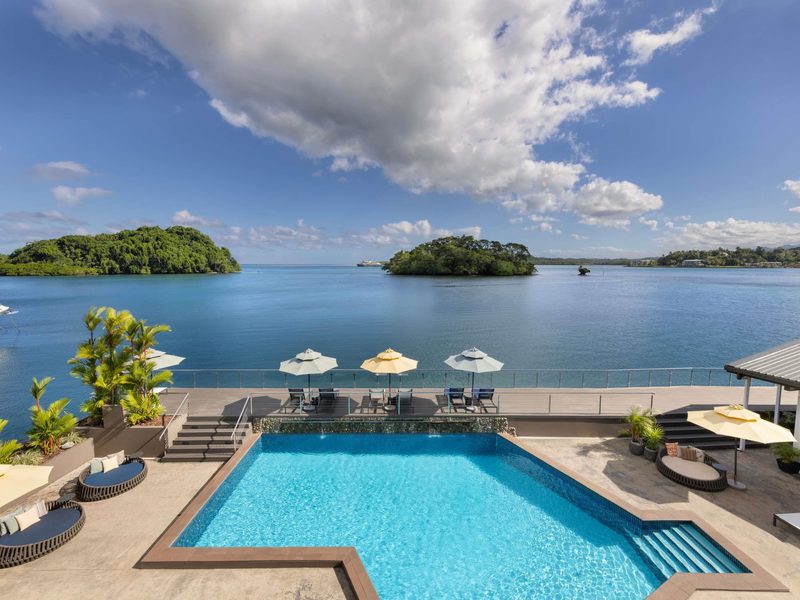
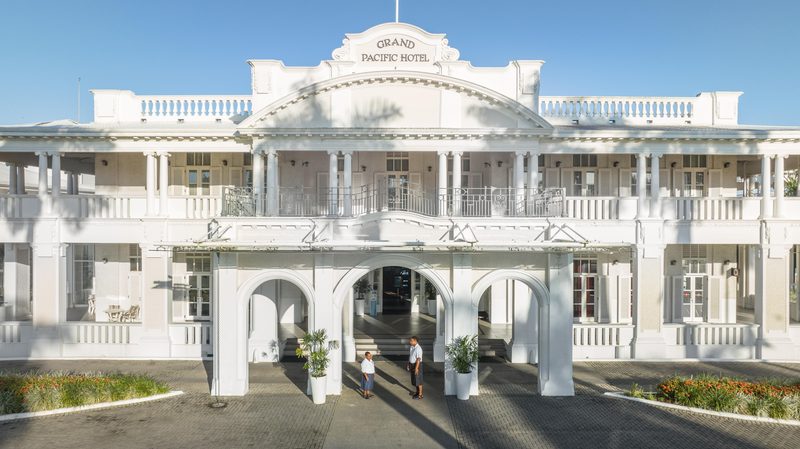
Hand-picked hotels across price tiers for April travellers.
Public Holidays in April
Dates that affect opening hours, transport and crowds
Good Friday
Observed nationwide as a public holiday. Date calculated from the national holiday calendar.
Easter Saturday
Observed nationwide as a public holiday. Date calculated from the national holiday calendar.
Easter Monday
Observed nationwide as a public holiday. Date calculated from the national holiday calendar.
Packing Checklist
Bookmark this page — your progress is saved between visits
Need the full list with shopping links?
Climate-specific gear, brand recommendations, and what to leave at home.
View Suva Packing List →Essential Tips
Insider knowledge and common pitfalls to avoid
Insider Knowledge
Suva's real food culture lives in the Indo-Fijian lunch spots along Cumming Street and the lanes behind the Suva Flea Market. These are counter-service places with handwritten menus. A plate of goat curry with roti and dhal arrives within minutes, cooked by families who have run the same stall for decades. The lunch rush hits between noon and 1 PM, when government workers pour out of nearby ministries. Arrive at 11:30 to eat without waiting.
Kava is not a tourist novelty in Suva. It is a daily social ritual. If you are invited to drink grog, as locals call it, at a neighbourhood session, clap once before accepting the coconut shell bowl. Drink it in one go. Clap three times after. The taste is earthy and slightly numbing on your tongue. Your second bowl goes down easier. Refusing politely is acceptable. Participating opens doors that money cannot.
The best view of Suva Harbour is not from the waterfront esplanade. It is from the grounds of the University of the South Pacific campus on Laucala Bay Road, specifically the grassy slope behind the library building. On the rare April evening when the clouds break before sunset, the light across the harbour turns the water copper and silhouettes the mountains of Rewa Province on the far shore. Locals bring takeaway containers from nearby food stalls and eat here. You should too.
April is the month when lychees and soursop appear at the Municipal Market in serious quantities, piled in baskets near the fruit vendors on the ground floor. The soursop is worth seeking out. It has a creamy, almost custard-like flesh with a tang that cuts through the sweetness. Fijians blend it into fresh juice that tastes nothing like the bottled versions. Ask any fruit vendor for a ripe one. They will pick it by smell and pressure, then split it open for you on the spot.
Avoid These Mistakes
Do not treat Suva like a beach destination. Do not spend the trip searching for white sand. Suva sits on a harbour surrounded by mangroves and reef flats, not resort-style beaches. The nearest swimmable beach at Natadola is over two hours west by car. Come to Suva for the market, the museum, the food, the forest, and the city itself. If you want a beach holiday, fly to the Mamanucas instead.
Do not schedule all outdoor activities for the afternoon. That is precisely when April's heaviest downpours arrive. The pattern is reliable enough to plan around: mornings are warm and often partly sunny, clouds build through midday, and by 2 PM the sky opens. Do your hiking, walking tours, and market visits before noon. Save afternoons for the Fiji Museum, a kava session, or a long lunch indoors.
Do not pack only resort wear and flip-flops. Suva is a working capital city where people dress with more formality than Nadi or Denarau. Entering a church, government building, or Fijian village in a swimsuit top or very short shorts draws genuine disapproval, not tourist-amnesty smiles. Bring clothing that covers your shoulders and knees for any cultural visit. Bring shoes with enough grip that a wet tile floor or muddy trail will not send you to Suva's Colonial War Memorial Hospital.
Short on time? See day trips around Suva on GetYourGuide.
Ready to plan your trip to Suva?
Now that you've got the research covered, here's where to go next.
Explore More Activities in Suva
Didn't see anything interesting yet?
Browse Viator's full catalog of tours, day trips, food experiences, and private guides in Suva.
See All Suva Tours on Viator