Things to Do in Suva in March
March weather, activities, events & insider tips
Low Season · Budget Friendly
March Weather in Suva
Long-run averages for March
88°F (31°C)
High Temp
76°F (24°C)
Low Temp
13.4 inches (340 mm)
Rainfall
90%
Humidity
19
Rainy Days
14
Sunny-Day UV
⚠ March falls within Fiji's cyclone season, which runs November through April. Tropical cyclones can bring destructive winds, heavy flooding, and multi-day disruptions to transport and services. Monitor Fiji Meteorological Service advisories throughout your stay and confirm your accommodation has a storm safety protocol.
⚠ Persistent heavy rainfall can cause flash flooding in low-lying areas of Suva, around Walu Bay and the Rewa River delta east of the city. Avoid driving through flooded roads, which in March can conceal washed-out surfaces and debris.
⚠ The UV index remains extreme even on overcast days. Cloud cover in March reduces visible glare but does not meaningfully block UV radiation, and reflected light off wet surfaces intensifies exposure. Sunburn through clouds catches visitors repeatedly.
Making the most of March in Suva? Browse tours and activities in Suva on GetYourGuide.
Is March Right for You?
Weigh the advantages and considerations before booking
Advantages
- + Suva's landscapes hit peak drama in March. Rain-fed hills behind the city and the canopy at Colo-i-Suva Forest Park turn electric emerald, a shade drier months never match. The waterfalls in the forest reserve run full force. Natural rock pools run deep enough for real swimming, not just wading.
- + March sits outside Fiji's tourist high season. Suva's already quiet attractions thin out further. The Fiji Museum, Thurston Gardens, and the Municipal Market move at a pace that lets you linger. No one shuffles you along. Accommodation rates drop noticeably from the June through September window.
- + The Indo-Fijian community's Holi celebrations transform Suva's streets and parks in mid-March. The festival here feels different from sanitized versions staged for tourists elsewhere in the Pacific. Powder-streaked faces. Water balloons launched from second-floor balconies. The smell of gulab jamun frying at pop-up stalls along Victoria Parade. The energy is impossible to fake.
- + March's heat and humidity push Suva's food culture into its most generous mode. The Municipal Market overflows with seasonal tropical fruit at peak ripeness. Jackfruit so fragrant you smell it three stalls away. Indian curry houses along Cumming Street serve heavier, richer dishes locals crave during the wet season. Slow-cooked goat rogan josh. Thick dhal with roti torn straight from the tandoor.
Considerations
- − March is one of Suva's wettest months. The rain is not the scenic tropical-shower variety. Downpours can last hours, sometimes entire days. Lower streets near Walu Bay turn into ankle-deep rivers. Outdoor plans become uncertain. Expect to reorganize your itinerary at least once.
- − March falls within Fiji's cyclone season, roughly November through April. Direct hits on Suva are uncommon. The threat is real enough. Monitor Fiji Meteorological Service advisories. Know your accommodation's storm protocol. Cyclone-adjacent weather bands bring sustained heavy rain and wind even when systems pass hundreds of kilometres away.
- − The humidity in Suva during March is relentless. Ninety percent average. It soaks through a cotton shirt within twenty minutes of stepping outside. It fogs camera lenses the moment you leave air conditioning. Short walks between Suva's downtown landmarks feel like endurance exercise by midday.
Settled on March? Compare hotel prices in Suva for your dates on Trip.com.
Best Activities in March
Top things to do during your visit
Suva in March sits deep in the wet season. The city wears it openly. Afternoon downpours roll in off the Koro Sea almost daily. They hammer corrugated rooftops in Suva's colonial quarter with a metallic roar that drowns out conversation. Then they vanish within the hour. The air turns thick, warm, and smelling of soaked earth and frangipani. Temperatures hold steady at highs around 88°F and lows near 76°F. The heat never relents. You feel it on your forearms the moment you step outside, a damp warmth that clings. Rainfall averages 13.4 inches for the month, comparable to January and December. March is one of Suva's wettest stretches. This is not a deterrent so much as a defining texture. The rain feeds the capital's reputation as one of the greenest cities in the South Pacific. Every hillside above the harbour erupts in dense, dripping foliage. It glows an almost fluorescent green under overcast skies. Visiting Suva in March means adapting to the city's wet-season rhythm. Don't fight it. Mornings tend to break warm and relatively clear. Locals crowd the Suva Municipal Market then, a cavernous, open-sided hall where vendors stack pyramids of taro, breadfruit, and freshly pulled cassava. The sharp tang of kava root hangs in the air. By early afternoon the clouds thicken. The barometric pressure drops noticeably. The rain arrives. Seasoned visitors use this window for indoor stops: the Fiji Museum in Thurston Gardens, the cluttered second-hand bookshops along Victoria Parade, or a long lunch at one of the Indian-Fijian restaurants near the bus station. Roti parcels come glossy with ghee. The dal is slow-cooked to a creamy, turmeric-stained thickness. By late afternoon the sky often clears again. Sunset over Suva Harbour, the water slate-grey, the clouds edged in copper, is worth walking the seawall for. March falls before the drier, cooler months that begin in May and run through September. Suva sees fewer international visitors now than it will in July or August. That translates to shorter queues at the few formal attractions, easier bookings for day trips, and a more local feel in the restaurants and kava bars along Cumming Street. The slap of cards on tables and low murmur of Fijian conversation fills the evening air. The trade-off is real: you will get rained on, the harbour water is murky rather than the postcard turquoise of the outer islands, and some outdoor excursions may need to flex around weather. But Suva is a city, not a beach resort. Its rewards, the food, the architecture, the Pacific-meets-subcontinental culture, are largely rain-proof.

Private Transfer Nadi Airport to or from Hotel or Resort
transportThe drive between Nadi Airport and Suva covers roughly three hours of Kings Road or the slightly longer Queens Road. Arriving in Fiji after a long-haul flight makes that stretch feel longer than it is. A private airport transfer removes the negotiation and uncertainty. A driver meets you at arrivals, loads your bags, and handles the route while you watch sugarcane fields give way to coastal mangroves and, eventually, the steep green hills ringing Suva's harbour. The vehicles are air-conditioned. That matters acutely when you step out of the terminal into March's 88°F wall of heat and the sweet, rotting-fruit smell of the tropics.
The most painless way to bridge the three-hour gap between Nadi's airport and Suva, after an overnight flight when navigating local buses or haggling with taxi drivers is the last thing you want.
Insider tip: Book for early morning arrival if possible. The drive follows the coast and the light is better before the afternoon clouds build. You also avoid the brief but intense rain squalls that can slow traffic on the two-lane stretches east of Sigatoka.

Port of Suva - Private Tour
private_tourThis private tour through Suva's port district and surrounding neighbourhoods puts a local guide beside you. The route typically threads through the municipal market, where the smell of fresh turmeric and raw fish mingles under the iron roof, and past the Indian quarter where tailor shops and sari merchants occupy ground floors beneath wooden balconies that creak in the wind. What elevates this beyond a walk you could do alone is the guide's narration. You'll learn which buildings survived the coups, which streets flood in cyclone season, and where to find the best Fijian kokoda, raw fish cured in lime and coconut cream until the flesh turns opaque and silky.
Suva's history is written in its buildings and street grid. But without someone who knows the stories, you walk past most of it.
Insider tip: Ask your guide to include a stop at the Suva Flea Market near the bus station. It is not on every itinerary. But the second-hand goods stalls and the food vendors selling crispy Indian-style pakoras fried to a deep bronze are worth the detour.

Suva Customized tour- Private
guided_experienceWhere the standard port tour follows a set route, this customised option lets you shape the day around your own interests: architecture, food, religious sites, Suva's small but spirited art scene, or some combination. The guide adapts on the fly. That is useful in March when a sudden downpour might send you ducking into the Fiji Museum or a kava bar rather than continuing a waterfront walk. The flexibility means you could spend an hour in the cool, dim interior of the Sacred Heart Cathedral, where stained glass throws coloured light across wooden pews that smell of polish and age, then pivot to a tasting circuit through the Indian-Fijian lunch spots on Pratt Street. You'll spoon through bowls of fish suruwa, a coconut-milk curry fragrant with lemon leaves, while rain drums on the awning overhead.
Suva rewards curiosity more than itinerary-following, and a guide who can reroute on the fly turns a rainy afternoon from a setback into the best part of the trip.
Insider tip: If you have any interest in Fijian kava culture, ask the guide to include a session at a local kava bar rather than a tourist-facing one. The etiquette is specific: clap once before drinking, say "bula" after draining the cup. A guide smooths the introduction.
This month: March rain makes the flexible format practical. Your guide can shift indoor and outdoor segments based on the sky, rather than marching through a fixed route in a downpour.

Private Transfer: Suva to Nadi Airport
transportThe return leg from Suva to Nadi Airport deserves its own booking rather than a last-minute scramble. Local taxis are not always metered and the public bus schedule does not align well with international flight times. A private transfer picks you up from your Suva hotel, typically in an air-conditioned van, and covers the three-hour coastal drive west. The route passes through Navua, a small town where the river meets the sea and the muddy water smells of silt and mangrove, and then through the Coral Coast, where the road hugs the shoreline and you can see reef breaks churning white against the grey-green sea. In March the road is occasionally slowed by standing water after heavy rain. The driver's local knowledge of which stretches flood and which alternate routes hold up is worth having.
Eliminates the stress of reaching Nadi Airport on time from Suva, where reliable metered transport is scarce and public buses run to their own logic.
Insider tip: Confirm your pickup time the evening before and build in an extra thirty minutes of buffer. March rain can slow the Queens Road drive, and missing a flight out of Nadi because of a flooded stretch near Pacific Harbour is an avoidable misery.
This month: Wet-season rain occasionally causes minor flooding on low sections of Queens Road between Navua and Pacific Harbour, so allow extra travel time beyond the standard three hours.

Kiara Package tour
guided_experienceThis package tour bundles several of Suva's main stops into a single guided day, typically the municipal market, the Fiji Museum, key colonial landmarks, and a waterfront circuit, at a lower per-stop cost than booking each element separately. The pace is brisk. That suits travellers with limited time in the capital. The guide handles logistics so you spend your energy looking rather than navigating. The museum stop alone is worth the time. Inside Thurston Gardens, the collection holds a rudder from HMS Bounty and a gallery of masi cloth, bark cloth decorated with geometric patterns in earthy browns and blacks that feel rough and fibrous under your fingertips. Outside, the gardens themselves are dense with tropical plants that release a green, vegetal scent intensified by the warm rain.
Covers Suva's essential stops in a single day with minimal planning, which is practical when your Fiji itinerary gives the capital only a brief window.
Insider tip: The museum's Bounty exhibit is small and easy to rush past. Ask the guide to slow down here, because the placards explain the mutiny's Fiji connection in detail that most visitors never encounter elsewhere.
Where to Stay in Suva in March
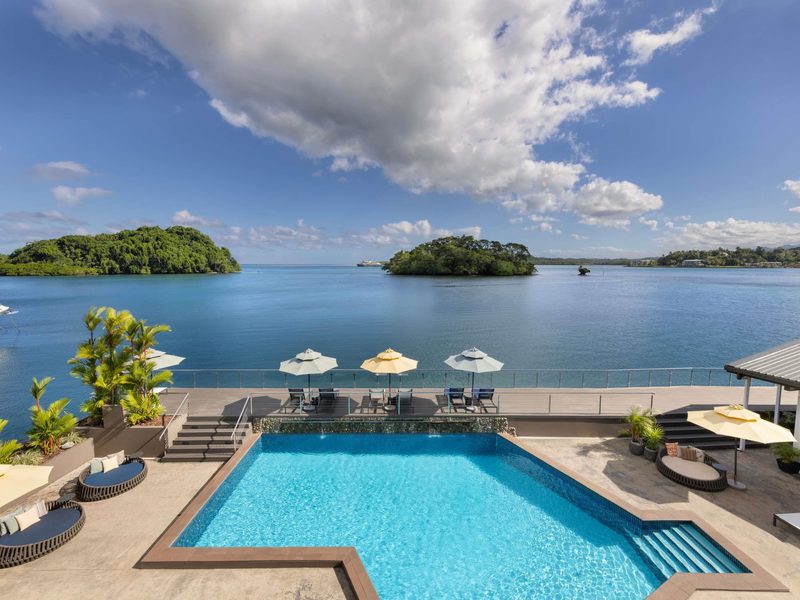
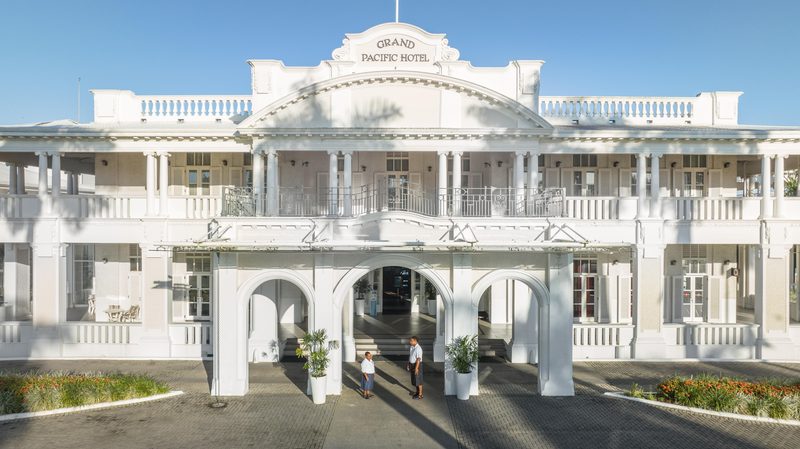
Hand-picked hotels across price tiers for March travellers.
Public Holidays in March
Dates that affect opening hours, transport and crowds
Good Friday
Observed nationwide as a public holiday. Date calculated from the national holiday calendar.
Easter Saturday
Observed nationwide as a public holiday. Date calculated from the national holiday calendar.
Easter Monday
Observed nationwide as a public holiday. Date calculated from the national holiday calendar.
Packing Checklist
Bookmark this page — your progress is saved between visits
Need the full list with shopping links?
Climate-specific gear, brand recommendations, and what to leave at home.
View Suva Packing List →Essential Tips
Insider knowledge and common pitfalls to avoid
Insider Knowledge
Suva is not the Fiji of the resort brochures, and that is precisely its value. The western side of Viti Levu, around Nadi and the Mamanucas, sells beach fantasy. Suva sells the actual country: a working Pacific capital where government ministers eat at the same curry houses as taxi drivers, where the university campus hums with students from twenty island nations, and where the waterfront smells of copra and diesel rather than sunscreen. If you wanted a beach holiday, you booked the wrong city. If you wanted to understand Fiji, you booked the right one.
The afternoon rain pattern in March is remarkably consistent. Most days stay dry until midday or early afternoon, then the sky darkens fast and the downpour arrives. Locals have long since adjusted their schedules around this. Markets, errands, and outdoor work happen before noon. The afternoon is for indoor tasks, kava sessions, and waiting it out. Align your sightseeing with this rhythm and March becomes far more manageable.
Kava, called yaqona locally, is not optional in Suva's social life. You will be offered it at markets, in villages, at cultural events, and in people's homes. The taste is earthy and numbing, like drinking muddy water that has been strained through a pepper plant, and the effect is a mild, pleasant relaxation. The ceremony matters more than the drink itself. Clap once before accepting the bilo. Drain it in one go. Clap three times after. Refusing is not offensive. But participating opens doors that stay closed to the tentative.
Do not plan Suva as a day trip from Nadi. The drive is roughly 190 km (118 miles) along the Kings Road or Queens Highway, and in March conditions, with rain-slicked roads, slow trucks, and occasional flooding at river crossings, it takes a solid three to four hours each way. Suva deserves at least two nights to feel its pace. Visit the market at dawn. Walk the waterfront. Eat properly. Let the city reveal itself beyond the first impression of government buildings and traffic.
Avoid These Mistakes
Expecting beach-resort Fiji. Suva's waterfront is a working harbour, not a swimming beach. The nearest decent beaches are at Pacific Harbour or beyond, and the water along Suva's coast is murky with silt, in March when river runoff peaks. Travelers who arrive expecting turquoise lagoons leave disappointed. Those who come for the city itself find something no resort can replicate.
Underestimating the rain and packing as though Fiji means permanent sunshine. March in Suva averages 19 days with measurable rain and 340 mm (13.4 inches) total. This is not light tropical mist. Travelers without proper waterproof gear spend their days trapped in hotel lobbies instead of exploring between the downpours.
Skipping the Municipal Market because it looks intimidating or unfamiliar. The market is the single best place in Suva to eat, learn, and connect with local life, and the vendors are accustomed to curious visitors. The cooked food upstairs is safe, fresh, and extraordinary. Walking past it to eat at a hotel restaurant is the travel equivalent of flying to Paris and eating at a chain.
Short on time? See day trips around Suva on GetYourGuide.
Ready to plan your trip to Suva?
Now that you've got the research covered, here's where to go next.
Explore More Activities in Suva
Didn't see anything interesting yet?
Browse Viator's full catalog of tours, day trips, food experiences, and private guides in Suva.
See All Suva Tours on Viator