Things to Do in Suva in January
January weather, activities, events & insider tips
Low Season · Budget Friendly
January Weather in Suva
Long-run averages for January
87°F (31°C)
High Temp
76°F (24°C)
Low Temp
13.5 inches (343 mm)
Rainfall
88%
Humidity
19
Rainy Days
15
Sunny-Day UV
⚠ January is peak cyclone season in the South Pacific. Tropical cyclones can form with short notice. They bring sustained winds above 120 km/h (75 mph), storm increase, and flooding. Monitor the Fiji Meteorological Service warnings throughout your stay. Ensure your travel insurance explicitly covers cyclone-related disruption, cancellation, and evacuation.
⚠ Flash flooding hits low-lying areas of Suva after sustained heavy rain. Nubukalou Creek and parts of the Raiwaqa and Samabula neighbourhoods are vulnerable. Avoid crossing flooded roadways on foot or in vehicles. Water that looks knee-deep can be waist-deep and moving fast.
⚠ Dengue fever risk increases in January. Higher mosquito populations thrive in warm, wet conditions. The Aedes mosquito that carries dengue bites during daylight hours. Use repellent consistently. Seek medical attention if you develop sudden high fever, severe headache behind the eyes, or joint pain during or after your trip.
Making the most of January in Suva? Browse tours and activities in Suva on GetYourGuide.
Is January Right for You?
Weigh the advantages and considerations before booking
Advantages
- + Suva in January is as empty of tourists as you will ever find it. The wet season thins out the already modest visitor numbers to the point where the Fiji Museum, Thurston Gardens, and the waterfront along Victoria Parade feel like they belong entirely to the city's residents. You get an unfiltered version of Fiji's capital, the one where government clerks eat lunch on park benches at Albert Park and students from the University of the South Pacific crowd the bus stops on Laucala Bay Road. That stripped-down quality is precisely what makes this month worth considering if you are after the real texture of a Pacific Island capital rather than a resort experience.
- + Tropical fruit hits its absolute peak in January. Suva Municipal Market overflows with mangoes so ripe the juice runs down your wrist, pawpaw that splits open with thumb pressure, and breadfruit roasted over open coals until the skin chars black and the interior turns to something between custard and fresh bread. Watermelon, soursop, guava, and the occasional jackfruit round out the stalls, and the Indo-Fijian vendors on the lower level stack pyramids of chillies and turmeric root beside baskets of snake beans and bele greens. You eat better in January at that market than most months of the year.
- + Colo-i-Suva Forest Park, about 11 km (7 miles) north of the city centre, transforms in January. The waterfalls that trickle politely during the dry season now thunder into rock pools deep enough to swim in, the canopy drips with moisture that catches the light in green columns, and the trails wind through mahogany and dakua trees so thick with moss and fern that the air smells like wet earth and chlorophyll. The swimming holes at the natural rock pools are at their deepest and most swimmable, which is a genuine trade for the muddier trail conditions.
- + Accommodation rates tend to drop noticeably in January. Suva is already more affordable than the resort corridors around Nadi and the Mamanuca Islands, and the wet season pushes prices lower still. You are likely to find rooms at rates that would be unthinkable during July or August, and the reduced demand means better rooms, quieter lobbies, and staff who have time to help you figure out which bus to catch to Pacific Harbour.
Considerations
- − The rain in January is not the polite afternoon-shower variety you might be hoping for. Suva sits on the wet side of Viti Levu, and 343 mm (13.5 inches) across 19 rainy days means some of those storms last half a day, turning gutters into rivers and low-lying streets near Nubukalou Creek into ankle-deep wading pools. The humidity at 88 percent compounds the effect: your clothes never quite dry, your shoes stay damp, and the air inside any building without air conditioning feels like breathing through a warm towel. You adapt, but the first few days can feel oppressive.
- − January falls squarely in the South Pacific cyclone season, and Suva has taken direct hits before. The probability of a cyclone disrupting any given week in January is relatively low. But the consequences when one does arrive range from cancelled inter-island ferries and closed roads on the Kings Road to full evacuations of coastal areas. Travel insurance that explicitly covers cyclone disruption is not optional this month, it is the cost of entry. Check the Fiji Meteorological Service forecasts before booking anything that cannot be rescheduled.
- − The seas around southeastern Viti Levu tend to be rougher in January, which limits offshore options. Dive operators at Pacific Harbour and Beqa Lagoon still run trips. But cancellation rates climb, visibility drops compared to the dry-season average, and the boat ride out to the reef can be uncomfortable in swells. If marine activities are your primary reason for visiting Fiji, January is likely not your month, or at the very least you should build several buffer days into your plans.
Settled on January? Compare hotel prices in Suva for your dates on Trip.com.
Best Activities in January
Top things to do during your visit
January lands Suva squarely in the thick of the wet season. The capital wears its most dramatic face. Afternoon downpours arrive with theatrical punctuality. The sky over the Suva Peninsula darkens from cerulean to slate in minutes. Warm rain hammers the corrugated iron rooftops of Victoria Parade so loudly that conversations pause mid-sentence. Between those cloudbursts, the air sits heavy and warm. Average highs reach 87°F and lows hover near 76°F. The hills ringing the harbor turn an almost implausible green, the kind of saturated emerald that only 13.5 inches of monthly rainfall can sustain. Steam lifts from the wet pavement in thin ribbons. The scent of frangipani and overripe pawpaw drifts through open shop doorways along Cumming Street. This is Suva at its most tropical, its most unapologetically itself. The rain reshapes how Suva moves. Locals time their errands around the dry windows of morning and late afternoon. The Suva Municipal Market fills earliest, before the first squall. Vendors stack pyramids of dalo root and bundled rourou leaves still beaded with dew. Kava sessions, tanoa bowls passed in quiet ceremony, stretch longer during wet afternoons. The city's Indian-Fijian curry houses along Marks Street see their busiest trade when rain sheets across the windows. The warm, cardamom-laced air inside becomes its own argument for staying put. Hotel availability across Suva tends to be more favorable this time of year. The dry-season visitor increase falls between June and October. January travelers get a less crowded version of Fiji's administrative and cultural capital. The trade-off is clear. You carry an umbrella and gain a city that feels unhurried, generous with its time, and stripped of any performative polish. The harbor itself takes on a particular character in January. Cargo ships and inter-island ferries bob against the Kings Wharf in water that carries the tannin-brown stain of rainforest runoff from the Rewa River delta. The coral reefs offshore lose some visibility in the sediment-heavy water. Suva's appeal in this season is urban and cultural rather than aquatic. The Fiji Museum in Thurston Gardens. The street-food stalls ladling bowls of fish suruwa. The second-hand bookshops where rain-day browsers linger for hours. This is a city that rewards the curious and the patient. January asks for both.

Private Transfer Nadi Airport to or from Hotel or Resort
transportThe three-and-a-half-hour drive between Nadi Airport and Suva crosses the full breadth of Viti Levu's southern coast. In January, this route develops through some of the most lush and rain-fed scenery in the Pacific. A private transfer turns what could be an anonymous shuttle ride into a proper introduction to Fiji's interior. The road hugs the Coral Coast past tidal flats where mangrove roots tangle in warm, silty water. It climbs through valleys where the air cools and smells of wet earth and wild ginger. It drops into river towns where roadside stalls sell freshly cracked coconuts. Your driver handles the logistics of a route that includes several single-lane bridges and occasional flood diversions. These are simply part of January travel on Viti Levu.
The overland crossing from Nadi to Suva is one of the South Pacific's great road journeys. A private vehicle lets you stop wherever the scenery or a roadside lovo pit demands it.
Insider tip: Request a departure timed for early morning. You avoid the midday heat in the unairconditioned stretches. The light along the Coral Coast before ten o'clock turns the lagoon shallows a pale, glassy turquoise that disappears once the sun climbs overhead.

Port of Suva - Private Tour
private_tourThe Port of Suva private tour takes the capital's working waterfront, a place most visitors glimpse only through a taxi window, and opens it up at walking pace. Your guide leads along Kings Wharf. The tang of diesel and salt mixes with the sweetness of copra being loaded onto inter-island freighters. You pass the dry-dock yards where wooden boats are scraped and recaulked by hand. Then you enter the thick of the Suva Municipal Market, a two-story concrete hall where the ground floor is a landscape of root vegetables, chili mounds, and fresh-caught reef fish laid across banana leaves. Upstairs, the handicraft section smells of sandalwood and coconut oil. The vendors, many of them women from Suva's outlying villages, will demonstrate how masi bark cloth is beaten and patterned if you show genuine interest rather than a camera. The tour contextualizes Suva as what it is: a port city whose rhythm is dictated by tides, trade routes, and the weekly ferry schedule to the outer islands.
This is the only guided experience in Suva that treats the working port and market as a single, interconnected story rather than separate stops on a checklist.
Insider tip: Ask your guide to include a stop at the fish section of the Municipal Market before noon. The morning catch is still arriving. You can watch vendors break down whole yellowfin tuna with cleavers while negotiating in rapid-fire Fijian.

Suva Customized tour- Private
guided_experienceWhere the standard port tour follows a fixed route, the Suva Customized tour hands the itinerary to the traveler. It wraps a local guide's knowledge around whatever draws your curiosity. Want to spend the morning in the Fiji Museum examining double-hulled canoe models and pre-colonial war clubs? Then eat kokoda, raw fish cured in lime juice and coconut cream, silky and bright with chili, at a family-run spot near the bus station that has no signboard? The guide makes it happen. Prefer to explore the crumbling colonial architecture along Gordon Street, where paint peels from wooden verandahs in long, sun-bleached curls, and then visit the Sri Siva Subramaniya temple in nearby Nadi upon return? The flexibility is the point. In January, this format is useful because your guide can read the sky and reroute around the afternoon storms. Duck into covered markets or indoor galleries when the rain turns the streets into temporary rivers. Steer toward outdoor sites during the clear-sky windows that open most mornings.
Suva rewards exploration that follows instinct rather than a brochure route. This tour provides the local navigational intelligence to make that possible.
Insider tip: Tell your guide in advance if you are interested in Suva's kava culture. They can arrange an invitation to a private kava circle in one of the neighborhoods behind the Government Buildings. No fixed-route tour includes this.

Private Transfer: Suva to Nadi Airport
transportThe return transfer from Suva to Nadi Airport reverses the coastal route. In January the drive carries its own rewards distinct from the inbound journey. The road west from Suva climbs through the Namosi Highlands. Waterfalls that are thin trickles in the dry months become roaring cascades fed by the wet-season rains. Their white noise is audible even through closed car windows. The vegetation pressing against the roadside is at its densest: banana palms, breadfruit trees, and hibiscus hedges so thick with red and orange blooms that the air through an open window carries a faint, honeyed sweetness. A private vehicle means your driver can pause at Pacific Harbour if you want a last meal on Viti Levu's south coast. Or push straight through to make a flight. The road surface is well-maintained but narrow in stretches. In January, occasional mudslides after heavy overnight rain can add time. A knowledgeable local driver who monitors conditions is worth every bit of the fare.
A private transfer removes the stress of navigating Viti Levu's single major highway under wet-season conditions. It turns the drive into a final, unhurried look at Fiji's interior.
Insider tip: Build in an extra hour of buffer beyond the standard drive time. January rains can cause temporary road closures near the Navua River bridge. Your driver will know the detour routes. But they add distance.

Kiara Package tour
guided_experienceThe Kiara Package tour bundles Suva's top-line sights into a single guided day at a gentler price point than the fully private options. It is a practical entry for travelers who want orientation before exploring on their own. The route typically threads through Thurston Gardens, where rain-glossed palm fronds drip onto gravel paths and the air is cool and loamy beneath the canopy of century-old trees. It passes the Parliament complex and the Presidential Palace. It moves into the commercial core where Suva's Indian, Fijian, Chinese, and European influences layer over each other in the shopfronts, temple facades, and restaurant menus of a city that has been a crossroads since the colonial sugar trade. The tour includes market time. In January the stalls overflow with wet-season produce: fat bundles of bele greens, jackfruit split open to reveal their sticky, sweet-smelling golden pods, and heaps of fiery bird's-eye chilies sold by the handful. It is a broad-stroke introduction. The strokes are painted by someone who knows which corners of Suva repay a closer look.
For travelers with a single day in Suva, this tour delivers the city's cultural and historical spine without requiring you to decode the bus routes or navigate the one-way streets yourself.
Insider tip: Wear shoes that can handle wet pavement and puddles. The garden paths and market floors in January are slick after rain. The tour involves substantial walking on uneven surfaces.
This month: January's heavy rainfall means the gardens and green spaces along the route are at peak lushness. Thurston Gardens in particular takes on a dense, almost greenhouse quality under the wet-season canopy. Outdoor segments may be interrupted by downpours, so waterproof layers are essential.
Where to Stay in Suva in January
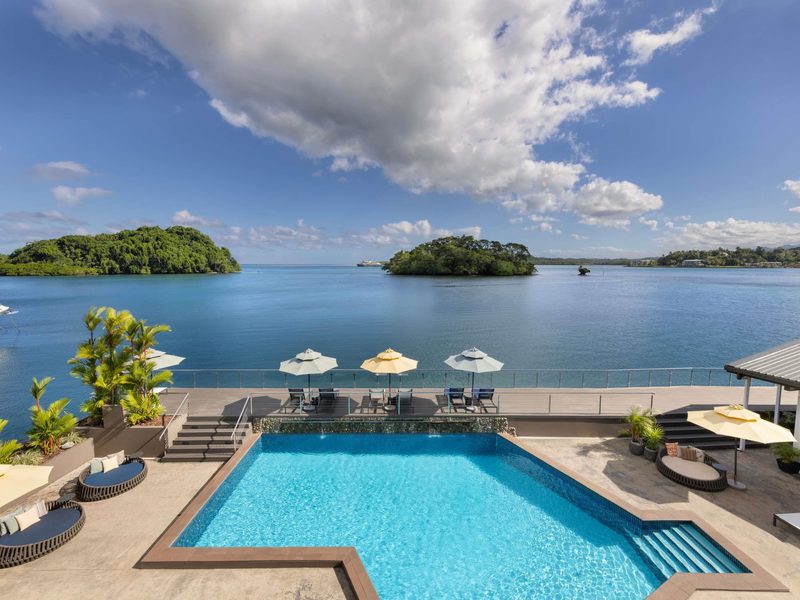
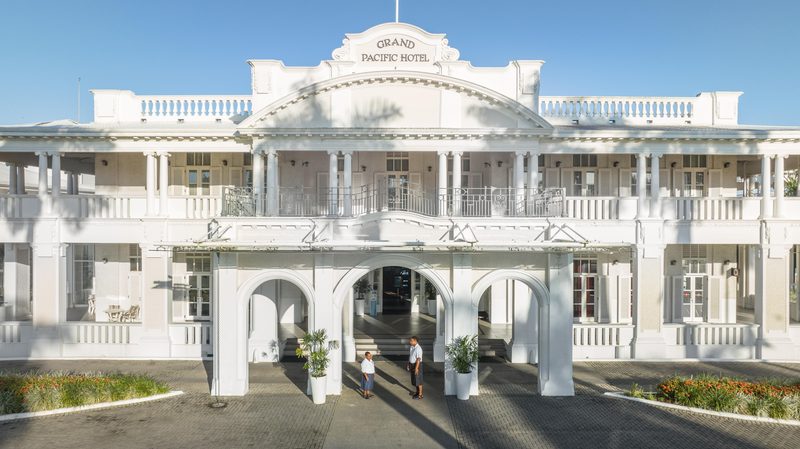
Hand-picked hotels across price tiers for January travellers.
Public Holidays in January
Dates that affect opening hours, transport and crowds
New Year's Day
Observed nationwide as a public holiday. Date calculated from the national holiday calendar.
New Year's Day
Observed nationwide as a public holiday. Date calculated from the national holiday calendar.
New Year's Day
Observed nationwide as a public holiday. Granted in lieu when the holiday falls at a weekend. Date calculated from the national holiday calendar.
Packing Checklist
Bookmark this page — your progress is saved between visits
Need the full list with shopping links?
Climate-specific gear, brand recommendations, and what to leave at home.
View Suva Packing List →Essential Tips
Insider knowledge and common pitfalls to avoid
Insider Knowledge
The bus from Suva to Pacific Harbour takes about an hour and costs a fraction of a taxi. Catch it from the Suva Bus Station near the municipal market, and sit on the left side for the coastal views. Buses leave frequently in the morning but thin out after 2 PM, so plan your return early. Locals call the route by its destination, not by number, so just ask for the Pacific Harbour bus and the driver will nod you on.
Suva eats lunch hard and eats it early. By 11:30 AM the food stalls in and around the municipal market and the curry houses along Cumming Street are packed with office workers and university students, and by 1 PM the best dishes are gone. If you want the freshest kokoda or the roti that just came off the tawa, eat when the locals eat. Dinner in Suva is a quieter affair, and most places that serve it close earlier than you might expect.
Kava sessions in Suva are not confined to tourist experiences. On any given evening, in the neighbourhoods around the Rewa Street area and near the University of the South Pacific campus, you will find groups of men and women sitting around a tanoa bowl in someone's front room or on a covered veranda, clapping and drinking until late. If you are invited, go. Bring a bundle of dried kava root from the market as a gift, accept every bilo offered with a single clap and a quiet bula, and drink it in one go. Sipping is considered poor form.
January is when Suva's Indian community marks the mango season with a quiet intensity that borders on devotional. The Fiji Gold and Malika varieties peak in January, and the best ones sell out at the market by mid-morning. Ask Indo-Fijian vendors specifically for tree-ripened fruit rather than the ones picked green and left to ripen in crates. The flavour difference is startling: the tree-ripened ones taste like honey and citrus with a faintly resinous finish, while the crate-ripened ones taste like damp cotton. This is the kind of knowledge that makes the market conversation worth having.
Avoid These Mistakes
Flying into Nadi and assuming Suva is a short trip away. The drive from Nadi International Airport to Suva covers roughly 190 km (118 miles) via the Queens Road, the faster of the two routes, and takes a solid three to four hours depending on traffic and road conditions, which worsen in January rain. Do not schedule a Nadi arrival and a Suva activity on the same day. Either arrange a private transfer in advance or take the express bus and plan to arrive by evening.
Skip Suva entirely in favour of the resort islands. Most visitors to Fiji never set foot in their own capital. They experience the country through international hotel chains and curated excursion desks. Suva is where Fiji lives: the parliament, the university, the market economy, the kava bars, the curry houses, the Pacific Island jazz scene. If you came to understand Fiji rather than to lie on a beach, Suva is where that happens.
Pack only resort wear. Suva is a working capital, not a beach town. Walking into a restaurant or government office in board shorts and a tank top marks you as someone who skipped their homework. Locals dress with more formality than resort areas suggest. Lightweight trousers and a collared shirt for men, or a modest dress or skirt below the knee for women, cover most situations. The sulu covers the rest.
Short on time? See day trips around Suva on GetYourGuide.
Ready to plan your trip to Suva?
Now that you've got the research covered, here's where to go next.
Explore More Activities in Suva
Didn't see anything interesting yet?
Browse Viator's full catalog of tours, day trips, food experiences, and private guides in Suva.
See All Suva Tours on Viator